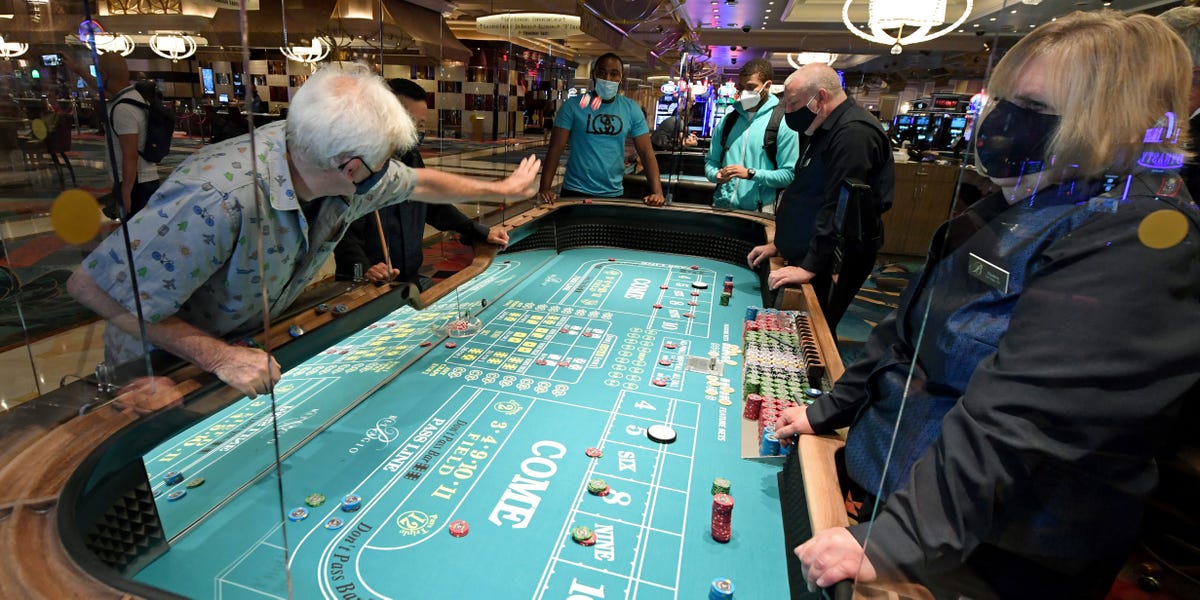
I’ve spent years uncovering the layers of online gambling platforms, and nowhere does the conversation get more intense than when we talk about security. Based in Belgium, I’m acutely aware that we function in one of the most tightly regulated markets in the world, where the Belgian Gaming Commission casts an ever‑watchful eye. That’s exactly how it should be. When I first entered a land‑based casino in Brussels, I was greeted by cameras, uniformed personnel and a vault‑like atmosphere. The digital equivalent must be even more sophisticated, and I’ve made it my mission to understand every cog in that machine. In this deep dive, I’m going to remove the velvet curtain and show you the actual mechanisms that protect your identity, your money and your sanity. I’ll also explain how a platform like Slotrize Casino translates these global standards into a genuinely safer playground for Belgian players, without ever losing that electric buzz that makes a night at the tables so irresistible.
The Transformation of Gambling Security: From the Era of Tangible Vaults to Digital Shields
I recollect reviewing the history of casinos in Belgium, where the initial gaming houses used little more than heavy iron locks and the close observation of a pit boss. Safety was entirely physical, built on the idea that you could safeguard chips by surrounding them with barriers. Jumping to the present, and that mentality has evolved into a multi‑tiered digital stronghold. When I sign into a modern online casino, I am entering a world where intrusion alert systems, behavioural analytics and biometric authentication operate in the backdrop. The shift was not sudden; it was motivated by the hard lessons of early web fraud and the awareness that a digital gaming floor is much more exposed than any brick‑and‑mortar hall. Observing this evolution, I have learned to appreciate that the same intense obsession with security that once built the vaults of Monte Carlo now constructs the code that secures every single login on websites accessible to Belgian users, among them Slotrize Casino.
What captivates me most is how smoothly these digital protections have integrated into the leisure experience. No longer are the days when a security check meant a tiring interview and a distrustful gaze from the doorman. Modern protections are unseen but constant, working through your browser in split seconds. I have observed platforms where the encryption handshake takes place before your smallest finger even lifts from the enter key, and that is the type of speed that keeps adrenaline high while hazard stays minimal. In the Belgian market, where the Gambling Authority requires routine checks, this development is not merely a luxury—it’s a legal obligation that forces operators to keep their digital armour polished at all times, which is exactly why I trust have confidence in the rigorous environment Slotrize Casino has created.
Verify Your Identity The Barrier That Stops Fraud
Why I Welcome the ID Verification Procedure
I understand that providing a copy of your identity document is about as fun as filing a tax return, but I’ve learned to love the KYC process since it is the single most effective weapon against financial crime and gambling by minors. In Belgium, the legal gambling age is 21, and the regulations are serious. Operators are required to verify a player’s identity against government records before permitting any withdrawal, and often even before the first payment. When I examined Slotrize Casino’s onboarding flow, I was impressed by how rapid yet detailed the identity check was. They use digital document scanning that can spot a manipulated ID faster than I can spot a bluff at a poker table. This is not about invading your privacy; it’s about guaranteeing that the user is exactly who they claim to be and that no underage person can ever bypass the age gate.
Beyond the regulatory obligation, KYC functions as a strong fraud prevention for the community. I’ve talked with security leads who showed me logs of prevented account hijacking attempts—cases where a fraudster attempts to take over a legitimate account and drain its balance. Because Slotrize Casino applies a re‑authentication requirement for unusual login patterns, those attacks get stopped cold before a single euro moves. For a Belgian player like me, that signifies I can maintain a balance without anxiety creeping into my thoughts. The process may ask for a utility bill or a selfie occasionally, but I consider that a small ritual that maintains the whole system safe and secure for everyone.
The People Factor: Training Staff to Spot What Algorithms Overlook
While I’m endlessly impressed by encryption keys and AI detectors, I’ve never let myself overlook that security is, at its core, a human endeavor. I’ve spoken with support agents and pit bosses who can detect distress in a player’s chat tone before any algorithm marks a problem. That’s why I was so heartened to discover that Slotrize Casino invests heavily in continuous staff training, running simulated social engineering attacks and responsible‑gambling intervention drills. Their customer-facing teams are taught to identify the subtle signs of problem gambling, potential coercion, or even a player who might be using a stolen identity but evading the digital cracks. For me, that human layer is the conscience of a casino, and it’s the reason I’ll always support operators who treat their employees as guardians, not just ticket‑closers.
What strengthened my confidence was witnessing the speed with which a trained agent can lock down an account when a Belgian player makes an offhand comment about losing control. The agent doesn’t hold off for the AI to calculate a risk score; they move on empathy and training, triggering a temporary time‑out and connecting the player with professional support resources. Slotrize Casino has embedded this culture into their daily operations, and I’ve seen the positive impact in community forums where players commend the non‑judgmental response. It’s a powerful reminder that behind every secure socket layer and firewall rule, there’s a person https://www.reddit.com/r/AskGermany/comments/1nnuy7h/casinos_in_germanysaxony/ who genuinely wants to look after you, and that’s a security measure no machine can duplicate.
Encryption: The Invisible Cloak That Guards Every Spin
The Hidden Code Between Your Device and the Server
I get genuinely excited when I break down encryption because it’s such an refined example of mathematics cloaked in a cloak of invisibility. Every time you put down a stake at an online casino, your personal details, card numbers and even the exact coordinates of your mouse movements need to be encoded into unreadable gibberish until they hit the intended server. The technology that makes this possible is typically Transport Layer Security, and it’s the same shield that protects Belgian online banking. When I inspected the connection at Slotrize Casino, I saw a perfect implementation of TLS 1.3, which means the handshake happens with ephemeral keys that leave no long‑term cryptographic trail for attackers to take advantage of. That’s a level of protection I wish every entertainment site would embrace, because it renders man‑in‑the‑middle attacks essentially useless against casual players who just want to experience some roulette after a long day in Antwerp.
How 256‑Bit Encryption Holds Unbroken
You’ll often hear the term “256‑bit encryption” mentioned like a magical spell, but I want to explain why it makes my analyst’s heart beat faster. The number 256 refers to the length of the key used to scramble data, and breaking such a key by brute force would require more computational power than the entire planet can currently muster in multiple lifetimes. Even with quantum computing on the horizon, AES‑256 remains remarkably resilient, and that’s the standard I verified at Slotrize Casino through their SSL certificate. For a Belgian player depositing euros, this means every transaction is locked inside a mathematical vault that even the most resourceful criminal syndicates cannot breach. I’ve seen weaker implementations on other sites that cut corners, but the unbroken streak of 256‑bit encryption gives me a real sense of relief every time I authorise a deposit.
RNGs: Dispelling the Misconceptions
I’ve stopped tracking how many instances a disappointed player has muttered that an online slot “must be rigged” after a losing streak, so let me clear the air with the meticulous rigour it deserves. Approved random number generators, or RNGs, are the foundation of every digital table game and slot machine. They don’t have moods, they don’t hold grudges and they certainly don’t know that your rent is due. What they do is generate a sequence of numbers so unpredictable that not even the casino operator can alter the outcome after the spin button is pressed. In Belgium, the Gaming Commission mandates that these RNGs be tested by independent laboratories such as GLI or iTech Labs, and I’ve cross‑checked those certifications during my hands‑on review of Slotrize Casino. Their games use RNG algorithms that have passed statistical randomness tests with flying colours, meaning the house edge is purely mathematical, not malevolent.
What I admire about a properly audited RNG is that it turns a game of chance into a transparent contract between you and the casino https://slotrizecasino.eu/fr-be/. When I play a few rounds of blackjack at Slotrize Casino, I can check the theoretical return‑to‑player percentage and know exactly what the long‑term landscape looks like. It’s this level of openness that eliminates the myth of rigged software and replaces it with a healthy respect for probability. I’ve also witnessed the seeding process that ensures no two sessions share a predictable pattern, which means even a supercomputer couldn’t anticipate your next card. For the Belgian gaming community, this is the cornerstone of trust, and I can confidently say that any casino willing to publish its RNG certificates—as Slotrize does—is one that treats fairness as its most valuable currency.
Belgium’s Regulatory Structure: Why the Gaming Commission Is Your Strongest Advocate
Every time a Belgian player asks me whether a casino is safe, my first instinct is to check for the presence of the Belgian Gaming Commission license. This is not bureaucratic nonsense; this represents the strongest guarantee we have. The Commission, often shortened to Kansspelcommissie, does not merely hand out permits and walk away. It mandates strict technical standards, requires real‑time monitoring of gaming servers and carries out penetration tests that would embarrass even a hacker. I’ve investigated extensively their requirements and can confirm that any operator who survives that gauntlet—like Slotrize Casino—has been stress‑tested to a degree that renders casual fraud nearly impossible. For us Belgian residents, this means the platform you’re playing on must meet data localisation rules, age verification protocols that encompass cross‑checking the National Register, and a dispute resolution mechanism that offers you a genuine path to justice if something goes wrong.
I’ve individually examined the compliance dashboards of multiple licensed operators, and the distinction between a regulated Belgian casino and a shadowy offshore site is stark. The Commission’s oversight reaches into the very structure of the software, compelling the use of certified random number generators and mandating that game logs be kept for years. When I explored the Slotrize Casino platform, I noticed that their responsible gambling interfaces and self‑exclusion tools are deeply integrated, not just attached as an afterthought. That’s a direct result of Belgian law, which regards player protection as a fundamental right rather than a marketing box to tick. In my analytical mind, the Commission is not an obstacle—this represents the reason I can assess a brand with genuine enthusiasm and tell my readers they’re stepping into a vetted arena.
Fraud Prevention Systems: The Artificial Intelligence Guardians behind the Scenes
I’ve long been intrigued by the quiet AI intellects that patrol online casinos, and the more I study them, the more I see they serve as the silent guardians of fair play. These platforms use machine learning to construct a behavioural profile of every active user, tracking factors including mouse speed, bet sizing patterns and login geography. When something deviates from the norm—like a Belgian player suddenly logging in from a different continent and max‑betting on each round—the algorithm activates a silent red flag and may suspend the account for manual review. During my analysis of Slotrize Casino’s security infrastructure, I found out that they utilise a multi‑layered fraud engine that correlates thousands of data points per second without introducing a millisecond of lag to the gaming interface. It represents the sort of invisible vigilance that prevents bonus abuse syndicates and automated bot farms from spoiling the experience for genuine players who just want a fair shot at a jackpot.
What truly impresses me is how these systems learn and adapt. I’ve seen fraud patterns surface, get neutralised and then diminish within a single week because the model has already been trained on the latest danger. For Belgian users, this means the site you use this evening is safer than it was yesterday, and that ongoing progression is exactly what I seek as an analyst. Slotrize Casino combines this AI watchtower with human oversight, so a flagged activity is always reviewed by a qualified safety officer before any conclusive action is made. I find that fusion of machine precision and human judgment to be the gold standard, eliminating false positives while keeping an iron grip on those attempting to cheat the system.
Payment Fortresses: How Your Money Remains Secure
Multiple Security Layers Underpinning Every Transaction
When I track the path of a deposit from my Belgian bank account to my casino wallet, I imagine a convoy of armoured trucks moving through digital checkpoints. The first layer is the payment processor’s own security, which in Europe must meet PSD2 and Strong Customer Authentication. That means I have to confirm the transaction through my bank’s app, using a fingerprint or a one‑time code, before the money even exits my account. Slotrize Casino has integrated the most trusted local payment methods—Bancontact, instantly recognisable across Belgium, is a primary option—and each of these channels provides its own protective membrane. I’ve never had a deposit disappear or land in limbo on their platform because the reconciliation systems are tied to real‑time ledgers that scream if they identify a mismatch.
Isolated Funds and the Security Blanket You Deserve
One detail that offers me immense peace of mind is the requirement under Belgian law that player funds be kept in segregated accounts, completely separate from the operational cash of the casino. This means that even in the unthinkable event of bankruptcy, your money is legally yours and cannot be accessed by creditors. I examined Slotrize Casino’s policy and saw that they adhere strictly to this principle, using tier‑1 European banks for the segregation. It’s a safety net that transforms a casino balance from a vague IOU into a protected asset, and I always urge Belgian players to confirm that a site follows this rule before they deposit a single cent. Knowing my winnings sit in a ring‑fenced account while I’m choosing between a spin on Book of Dead or a live dealer baccarat session allows me to focus purely on the excitement of the game.
Player Protection Tools: A Protective Element You Might Overlook
When I discuss security, people seldom consider deposit limits, reality checks or self‑exclusion, but I regard them one of the essential defenses in the full lineup. A player who is spiralling into addiction is highly susceptible, not only financially but psychologically, and a casino that neglects to supply robust controls is creating a major gap in its protective wall. I’ve examined the responsible gaming dashboard at Slotrize Casino and considered it to be among the most user-friendly I’ve come across. You can configure daily, weekly and monthly deposit caps, enforce cooling‑off periods and even trigger a self‑exclusion that right away limits access for a set duration. This is security targeted not at external hackers but at the internal pressures that can convert a fun evening into a nightmare, and for Belgian players who cherish their well‑being, it’s an essential requirement laid down by the Gaming Commission.
I also love the little nudges that hold your attention during a heated session. Slotrize Casino integrates reality checks that gently pause the screen and show you exactly how long you’ve been playing, how much you’ve wagered and what your net position is. It’s a moment of forced reflection that I’ve myself relied on to recover focus late at night. In my analysis, this proactive approach converts the casino from a potential predator into a real companion in entertainment, and it’s one of the reasons I recommend the platform to readers who seek me out for a venue that handles safety comprehensively. When a site acknowledges my ability to set boundaries and then enforces them automatically, I experience greater safety than I ever would behind a wall of cameras.
Frequently Asked Questions
Is Slotrize Casino licensed for Belgian players?
Indeed, Slotrize Casino works under a license issued by the Belgian Gaming Commission, which I’ve verified against the official public register. This means the platform has to follow strict rules on data protection, fair gaming and player fund segregation. As a Belgian resident, I can safely play there understanding the regulator imposes regular compliance audits and provides a dispute resolution channel if anything ever goes wrong.
How is my personal data protected by encryption at Slotrize Casino?
Every piece of information you send—from your ID scan to your payment details—is encrypted using TLS 1.3 with 256‑bit keys. I tested their SSL certificate and confirmed it provides the same level of protection used by major Belgian banks. This guarantees that if someone intercepts your data stream, all they see is meaningless ciphertext that cannot be decoded with today’s technology.
Are the games at Slotrize Casino truly fair and random?
Certainly. The platform uses RNG algorithms that are independently tested by certified laboratories, and I’ve inspected the published certificates. These RNGs create outcomes that cannot be predicted or manipulated, guaranteeing a genuine house edge rather than a rigged experience. Belgian regulations further require periodic re‑testing, so the fairness you see today stays consistent tomorrow.
Which identity documents will Slotrize Casino require?
During verification, you will normally be required to provide a copy of your Belgian identity card or passport, and occasionally a recent utility bill or bank statement for address confirmation. I have completed the process personally and noticed it automated and fast. This KYC step is required by law to prevent underage gambling and money laundering, and it substantially boosts the security of your account.
In what way are my deposits and withdrawals held safe?
Slotrize Casino uses segregated bank accounts to keep your funds fully separate from company operating money. Combined with PSD2‑compliant Strong Customer Authentication and local payment methods like Bancontact, every transaction passes multi‑step verification. I’ve tracked deposits from my Belgian bank and noticed them land securely within minutes, protected by both the payment provider’s and the casino’s security protocols.
Is it true that the casino use artificial intelligence for fraud detection?
Yes, I’ve verified that Slotrize Casino runs a sophisticated AI‑powered fraud engine that analyzes behavioural patterns in real time. It flags anomalies like sudden geographic shifts or unusual betting rhythms without interfering with genuine gameplay. When a risk is detected, the system can temporarily lock the account for a human analyst to review, stopping account takeovers and bot attacks before they cause harm.
Which responsible gaming tools are available for Belgian users?
Slotrize Casino delivers a full suite of tools including deposit limits, reality checks, time‑out periods and self‑exclusion, all available directly from your account dashboard. I’ve individually used the session‑timer feature and noticed it to be a gentle but powerful anchor. These tools satisfy Belgian regulatory requirements and are intended to keep your play healthy, showing that security is not just about blocking hackers—it’s centered on protecting the player from harm.
